By: Nicole M.
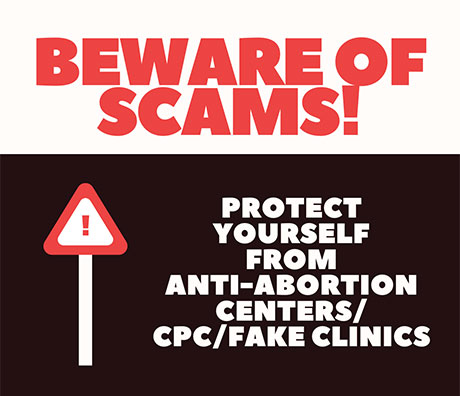
Across the country, in towns big and small, people searching for abortion care are walking into places they believe are legitimate clinics only to be met with shame, misinformation, and stalling tactics. These places are known as anti-abortion pregnancy centers or crisis pregnancy centers (CPCs), while they may look like abortion clinics (and even have almost identical names), they are anything but.
What Are Anti-Abortion Centers or Crisis Pregnancy Centers?
Crisis pregnancy centers are often run by organizations with one goal: to stop people from having abortions. They might offer free pregnancy tests or ultrasounds, but make no mistake, these services are not about providing care. They’re about advancing a dangerous agenda. Most fake clinics are not staffed by licensed medical professionals, and they do not offer abortion services. What they do offer is judgment, manipulation, and often outright lies.
Unlike real clinics, these anti-abortion centers are not held to the same medical standards. They don’t have to follow evidence-based practices. They’re not required to give accurate information. And yet, they are allowed to exist and operate often right next to actual medical clinics with almost no oversight.
You might expect these places to be funded solely by private, ideologically driven groups—and they are. Religious organizations, wealthy donors, and anti-abortion foundations pour money into them.
But here’s the part that’s truly shocking: taxpayer dollars are helping to fund these deceptive centers.
Yes, your hard-earned money may be going to support places that exist solely to mislead and delay women from accessing reproductive healthcare. Many of these anti-abortion centers receive federal funding through programs like Title V (which supports abstinence-only education) and Temporary Assistance for Needy Families (TANF)—under the false guise of “family support” or “parenting education.”
Some states are going even further—directly allocating funds in their budgets and creating grant programs that funnel public money into these centers (including one of the most significant budgets in Florida). This raises serious concerns about the separation of church and state and, even more urgently, about how our government is actively supporting efforts to restrict access to medical care.
Let’s be clear: Reproductive healthcare is healthcare. Period.
The Real-World Impact on Women
For someone facing an unplanned pregnancy—especially a young person navigating this for the first time—time is everything. And this is where these fake clinics do real damage.
They use search engine manipulation to show up when someone types “abortion clinic near me,” making it easy to mistake them for real providers. Once inside, patients may face:
- Delays in care due to lies about how far along they are or what state laws allow.
- Emotional manipulation, using graphic images or religious messaging dressed up as medical advice.
- Shaming tactics are designed to scare, guilt, or isolate people during one of the most vulnerable moments of their lives.
These experiences aren’t just upsetting; they can be traumatic. And they can lead to serious consequences, including delayed or denied access to abortion, prenatal care, or even adoption services. And since HIPAA doesn’t apply to many of these fake clinics, pregnancy information can be shared with schools, jobs, and family members without the pregnant person’s permission.
This Is About More Than Politics—It’s About Human Rights
Access to accurate, compassionate, timely reproductive healthcare isn’t a political issue; it’s a matter of basic human dignity and public health. When fake clinics mislead pregnant people, it’s not just a personal setback; it can affect their health, their futures, and their freedom to make informed decisions about their own lives.
Some states and lawmakers are starting to fight back—pushing for transparency laws that require fake clinics to disclose that they don’t provide abortions or medical care. But enforcement is inconsistent, and millions of people are still being deceived.
The most powerful tools we have right now are education and awareness. The more people understand what CPCs are and what they’re not, the better we can protect ourselves and others from their harm.
AWC’s Call to Action:
Everyone deserves access to real medical care. Everyone deserves the truth. Let’s shine a light on the harm anti-abortion centers cause and work toward a future where reproductive healthcare is safe, accessible, and free from shame.
At A Woman’s Choice clinics, we offer compassionate, non-judgmental abortion care to our communities. We educate and counsel our patients on all of their options and provide medication and procedural abortions to those who decide it’s the best decision for themselves and their families. We trust our patients, and our patients can trust us.
Sources:
Luthra, S. (2024, August 1). States have increased anti-abortion center funding by nearly $500M since Roe was overturned. The 19th. https://19thnews.org/2024/08/states-500-million-anti-abortion-centers-after-roe/
Issue brief: Crisis pregnancy centers. ACOG. (n.d.). https://www.acog.org/advocacy/abortion-is-essential/trending-issues/issue-brief-crisis-pregnancy-centers
Montoya MN, Judge-Golden C, Swartz JJ. The Problems with Crisis Pregnancy Centers: Reviewing the Literature and Identifying New Directions for Future Research. Int J Womens Health. 2022 Jun 8;14:757-763. doi: 10.2147/IJWH.S288861. PMID: 35706995; PMCID: PMC9189146.