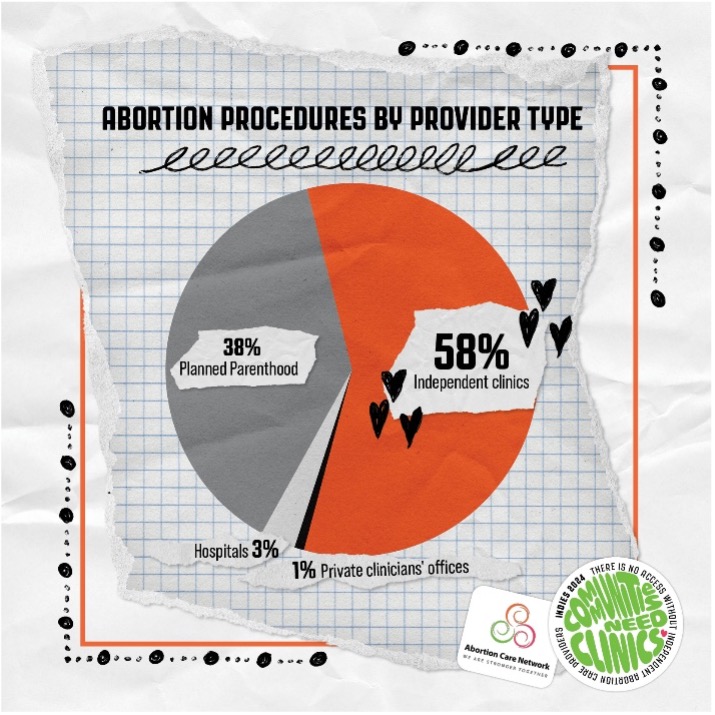
As of October 2024, in the United States, all but 13 states still have laws in place allowing women to obtain a legal abortion. While the restrictions on abortion vary from state to state, abortion care itself is provided by only a few options: private providers, hospitals, Planned Parenthood, and independent abortion clinics. All provide safe options; however, independent clinics account for nearly 60% of abortions in the country.
Independent providers are necessary to maintain sustainable, accessible reproductive health, especially abortion care. Independent clinics are staffed by local people in multiple positions who work together to care for patients in communities of all sizes. Yet, these clinics often go unrecognized and under-resourced. Independent clinics do not receive the same level of support, visibility, or fundraising capacity as institutional care, making it harder for patients to find and afford them, and for their doors to remain open.
In the South and Midwest, abortion bans have forced 70% of independent clinics to close or stop abortion care. These closures and bans disproportionately affect marginalized communities, such as those with low or no income, LGBTQ+, immigrants, people of color, indigenous communities, young people, and those living in rural areas. It is for these communities that independent clinics are most necessary.
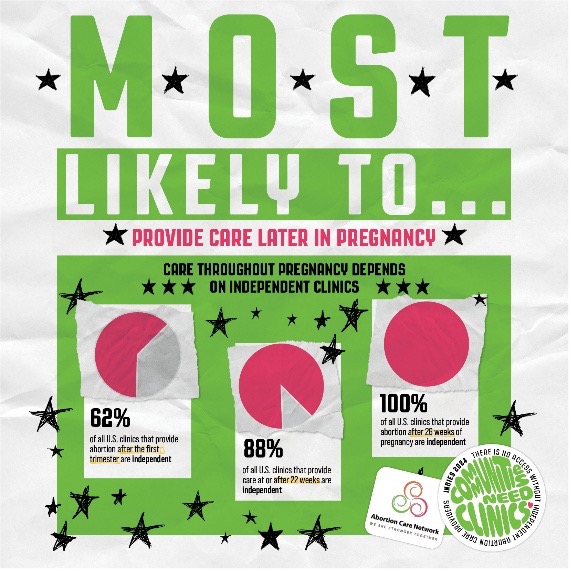
Abortion care depends on independent clinics. Although most abortions happen in the first trimester, there are many reasons abortions are needed later in pregnancy. Independent clinics make up 62 percent of all clinics in the U.S. that provide second and third term abortions. Because independent clinics are so essential to care throughout pregnancy, their closings create an additional burden for patients who may have to travel hundreds of miles for an abortion.
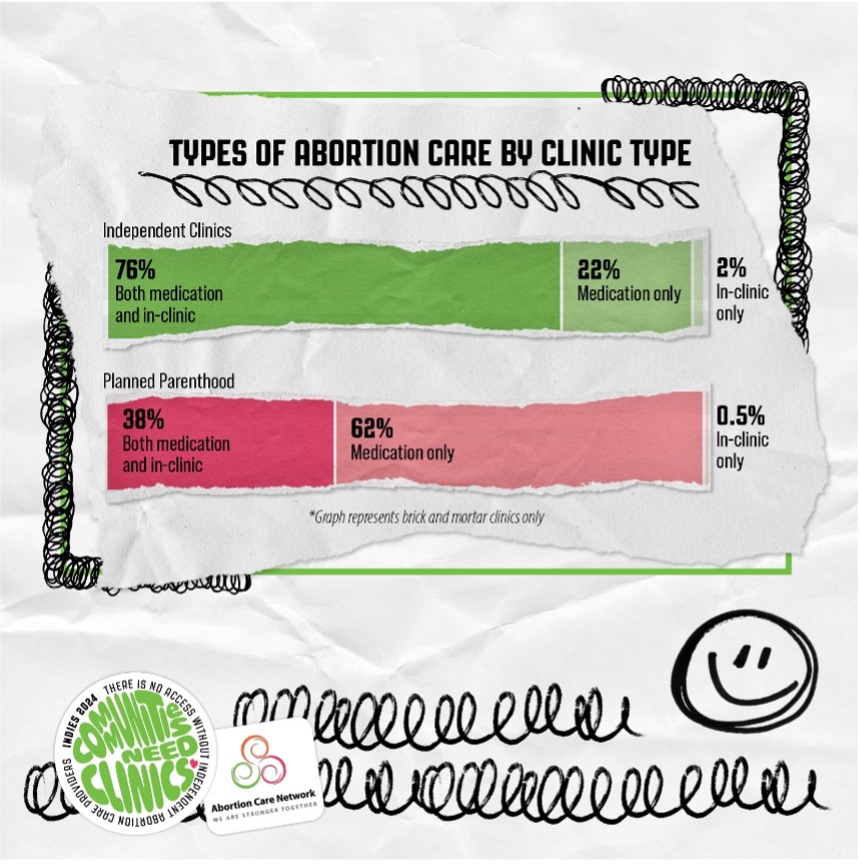
Independent clinics are also more likely to offer both medication and surgical procedures in the clinic. Both methods are safe and effective; however, there are reasons why a patient may prefer one over the other. For instances such as partner violence, unsupported minors, unhoused people, and those with family or work obligations, the flexibility of abortion options offered at independent clinics is often necessary.
All communities need abortion clinics. Since 2022, and despite the threats of criminalization, 32 independent clinics have opened in the country. Some have had to relocate and build new community connections, but remain dedicated to providing necessary healthcare.
A Woman’s Choice clinics are independent. And in an ever-changing social and political landscape, we remain open to ensure safe and trusted abortion care for the communities we serve in Jacksonville, FL, Greensboro, Raleigh, Charlotte, NC, and Danville, VA.
If you would like to help support independent clinics in your community, there are multiple ways to do so. By raising awareness, volunteering, making donations, and showing open and honest support without stigma, we can all bring communities together.
Resource: Abortion Care Network (2024). Communities Need Clinics: There is No Access Without Independent Abortion Care Providers.