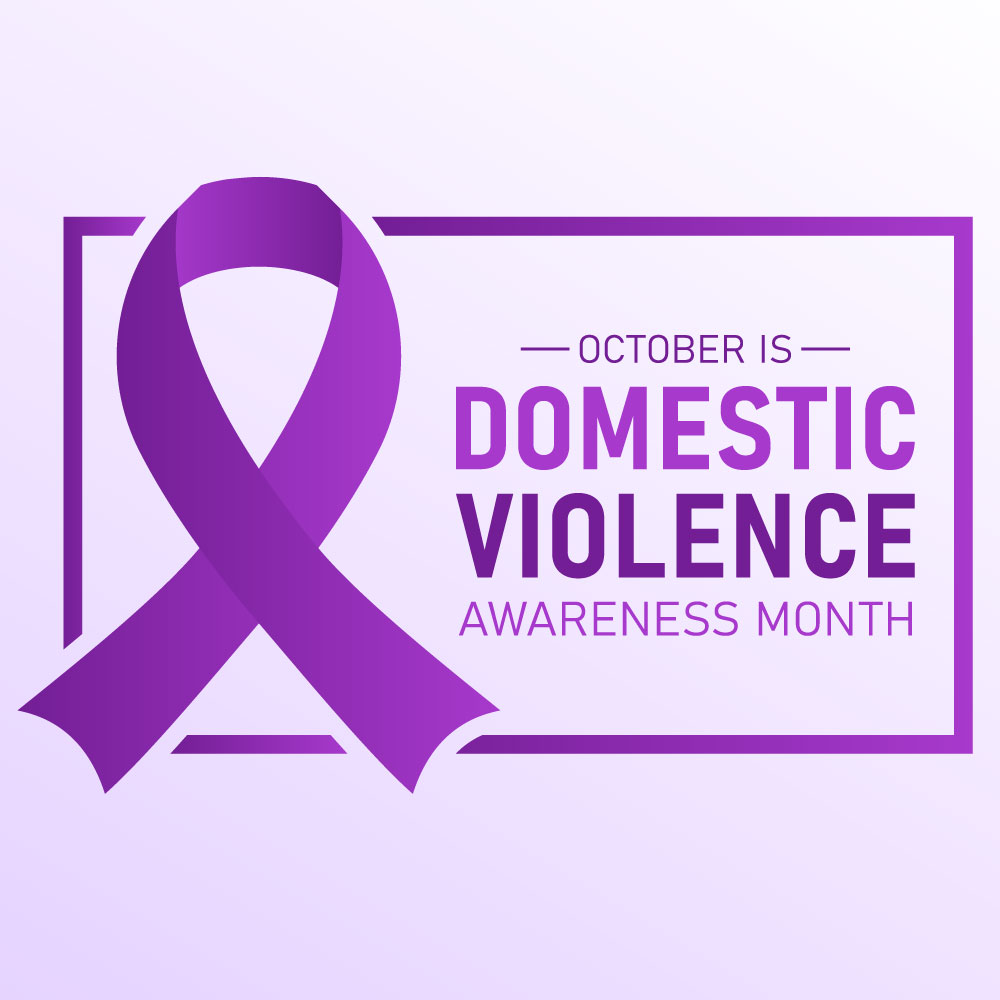
When October comes, pink ribbons fill the streets, offices, and store shelves — symbols of breast cancer awareness. And while that cause is deeply important, another issue just as urgent often fades into the background this month: Domestic Violence Awareness.
Domestic violence isn’t only a woman being beaten behind closed doors. It’s emotional control, isolation, financial manipulation, sexual violence, and coercion. It’s the fear of speaking up. It’s the exhaustion of pretending things are fine. It’s the silent pain of wondering if anyone would believe you.
Not long ago, men could legally beat or sexually coerce their wives without consequence. Those days may be gone on paper, but the scars of that past live in our laws, our culture, and the systems that still fail survivors today. Domestic violence cuts across every race, religion, and income level — but Black, Indigenous, and other women of color often face higher risks and greater barriers when seeking help due to systemic inequities like housing insecurity, language barriers, and mistrust of law enforcement.
According to the Centers for Disease Control and Prevention (CDC), about 1 in 3 women (35.6%) and 1 in 4 men in the U.S. have experienced some form of physical, sexual, or stalking violence by an intimate partner in their lifetime (Smith et al., 2018). Each day, their intimate partners kill an average of three women, a haunting statistic that reminds us how vital access to safe shelter and compassionate care truly is (Atrium Health, 2023).
And yet for many survivors, reporting abuse or leaving is not as simple as walking out the door. It’s choosing between safety and homelessness. Between being believed and being blamed. Between protection and poverty. The CDC’s National Intimate Partner and Sexual Violence Survey (NISVS) found that over 41% of women have endured sexual violence, physical violence, or stalking by an intimate partner and reported a related impact. Over 61 million women have experienced psychological aggression by a partner in their lifetime (CDC, 2018).
I think about these statistics every time I meet someone like Cherry.
This past week at A Woman’s Choice of Raleigh, a patient arrived with no identification, no money, and no belongings — only her child’s diaper bag and the clothes on her back. She had fled her home that morning. As she quietly explained to the front desk that she didn’t have any identification, I stopped what I was doing. I asked if she had a photo ID on her phone. She didn’t.
My heart sank because I knew that fear — the fear of not being believed, of being turned away, of having to go back. I called our leadership team to ask if we could make an exception to see her without an ID. We were able to confirm her identification another way and continued her check-in. I immediately went to our supply closet to grab a few patient support bags that included toothpaste, toothbrushes, socks, pads, and other necessities. I slipped in local domestic violence resource cards and called our navigator team to get her appointment fully funded.
When I told her she wouldn’t owe anything and that she’d be refunded for what she had already paid, she started to cry. Through tears, she apologized — I told her none of that mattered and asked if she wanted a hug. She said that she was worried about her smell, but accepted the hug and said she wasn’t used to being shown kindness.
We stood inside the Raleigh clinic for about fifteen minutes. She cried, and I just held her. In that moment, I remembered my own past — the fear of leaving, the loneliness, the uncertainty. I thought about my grandmother, my aunts, my sister, my best friend, and all the patients I’ve seen walk through our doors, each carrying their own silent story.
When Cherry returned for her procedure, she appeared lighter. Her child was safe, and for the first time in a while, so was she. She smiled, hugged me again, and thanked me. I told her, That’s what we’re here for.
Moments like that remind me why this work matters. Why it’s essential. In abortion care, and all healthcare, compassion and nonjudgment shouldn’t be optional. No one should ever have to stay in a place they don’t want to be because of fear, or lose themselves because policy or cultural rules made escape impossible. Our job is to make sure every person who walks through our doors leaves with more than just care — they leave with dignity, safety, and hope.
According to the National Coalition Against Domestic Violence (NCADV), more than 10 million people are abused by intimate partners in the U.S. each year (Smith et al., 2018). Domestic violence is the leading cause of injury for women aged 15–44; more common than car accidents, muggings, or cancer combined (NCADV, 2024). Every single one of us deserves safety, shelter, and support.
If you or someone you know is in danger, please reach out for help. You are not alone. You are not broken. You are not to blame.
Local Domestic Violence Resources
Jacksonville, FL – Hubbard House
24-hour hotline: (904) 354-3114 · Text: 904-210-3698
6629 Beach Blvd., Jacksonville, FL
Provides emergency shelter, counseling, legal advocacy, and outreach for survivors in Duval & Baker counties.
Raleigh, NC – InterAct
Hotline: (919) 828-7740 · Toll-free: (866) 291-0855
Offers shelter, counseling, legal advocacy, and child support services.
Greensboro, NC – Guilford County Family Justice Center
Hotline: (336) 641-SAFE (7233)
One-stop center providing safety planning, legal aid, and emergency shelter referrals.
Charlotte, NC – Safe Alliance
Greater Charlotte Hope Line (24/7): (980) 771-4673
Provides trauma-informed shelter, counseling, legal advocacy, and support groups.
Danville, VA – Haven of the Dan River Region
Hotline: (434) 554-0605 · Office: (434) 483-5482
Serves Danville and Pittsylvania County with shelter, advocacy, and safety planning.
National Domestic Violence Hotline (24/7)
Call 1-800-799-7233 (SAFE) or chat online at thehotline.org
References
- Atrium Health. (2023). Domestic Violence Statistics and Facts.
- Centers for Disease Control and Prevention. (2018). National Intimate Partner and Sexual Violence Survey: 2015 Data Brief – Revised. National Center for Injury Prevention and Control, Division of Violence Prevention.
- National Coalition Against Domestic Violence (NCADV). (2024). Domestic Violence National Statistics.
- Smith, S. G., Zhang, X., Basile, K. C., Merrick, M. T., Wang, J., Kresnow, M., & Chen, J. (2018). The National Intimate Partner and Sexual Violence Survey: 2015 Data Brief – Updated Release. U.S. Department of Health & Human Services.