
By Winter R.
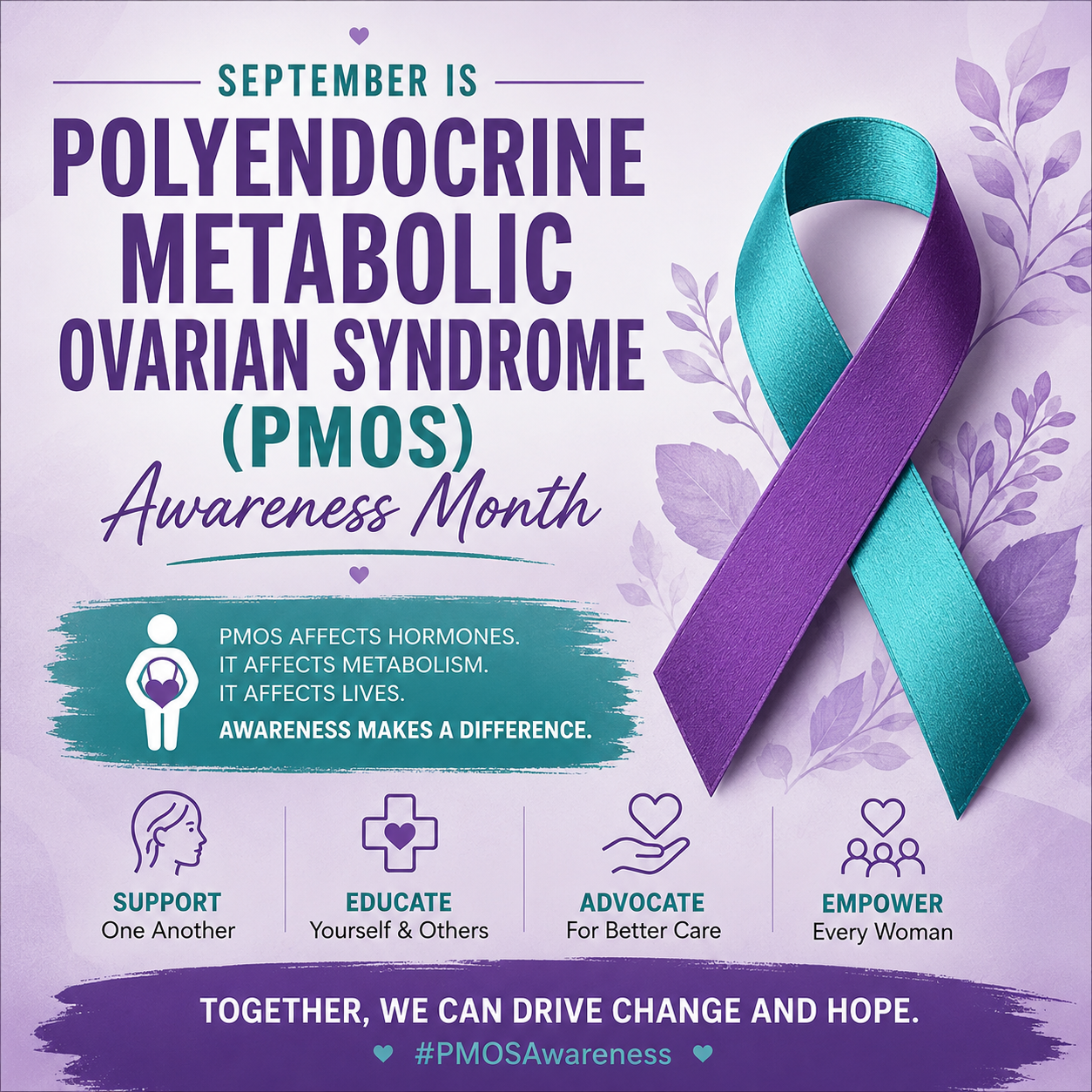
September is Polyendocrine Metabolic Ovarian Syndrome (PMOS) Awareness Month, and it is important to bring to light how common PMOS actually is. PMOS affects about 1 in 8 people with uteruses worldwide, and it is estimated that about 70% of people are still undiagnosed, according to the WHO.
Polyendocrine metabolic ovarian syndrome (PMOS), previously called polycystic ovary syndrome (PCOS), is a hormonal health issue that typically starts to show signs in people around the time of their first menstrual period. Sometimes, symptoms may develop later.
The name used until 2026, polycystic ovary syndrome (PCOS), was derived from a typical finding on medical images called “polycystic ovary morphology”. A polycystic ovary has an abnormally large number of developing follicles, looking like many small cysts. There were various objections to the name polycystic ovary syndrome: the “cysts” are not truly cysts, but actually follicles. Hence the new name.
For people who have PMOS, symptoms may look like:
- Periods that last many days, or periods that are very irregular.
- Hirsutism, or male-pattern hair growth, or hair that grows on the chin, upper lip area, face, and other areas of the body.
- Large ovaries
- Acne/Oily Skin
- Infertility
- Skin Tags and Skin Discoloration (Dark Patches)
- Because these symptoms can overlap with other health conditions or cause them, it is important to discuss any concerns with a healthcare provider.
The exact cause of PMOS is unknown, but it is thought that genetic and lifestyle factors may play a part. A variety of treatments are available to address symptoms of PMOS. Treatment is tailored to each person according to symptoms, other health problems, and whether they want to get pregnant. There is no cure for PMOS, but medicine helps reduce symptoms. Treatment options may include medications to induce ovulation, a change in diet, and exercise activity levels.
Medicine usually used for diabetics may be an option as well, since patients with PMOS are insulin resistant. PMOS is diagnosed by considering the patient’s medical history and symptoms. Ultrasound can be used to assess ovarian size and determine whether they appear abnormal or contain cysts. A blood test may also be performed to check for abnormally high hormone levels.